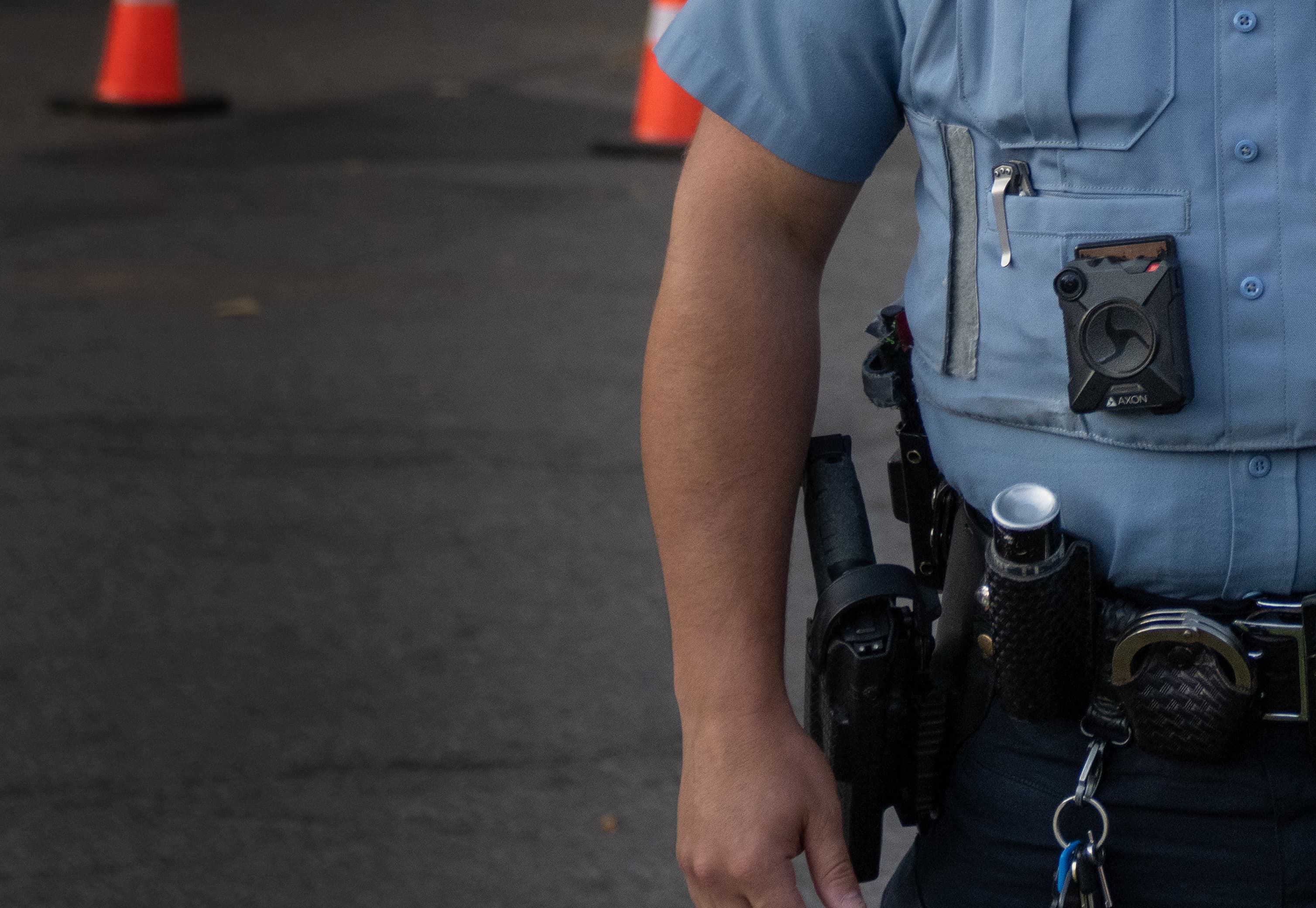
Fifty States, Fifty Rulebooks: Security Officer Licensing in America
There is no national security officer license, only fifty state rulebooks with different training hours, background standards, and armed carry rules, and almost no reciprocity. For multistate operators, compliance is not friction. It is a core competency that keeps officers and employers lawful.
There is no single national license to work as a security officer in the United States. There is a patchwork of state systems, each with its own training hours, background standards, renewal cycles, and rules about what an officer may carry and do. For companies that operate across state lines, and for officers who move, this fragmentation is a constant operational headache and a recurring source of compliance risk.
The Range Is Enormous
Some states require an unarmed officer to complete only a handful of hours of training before working a post. Others require dozens of hours covering legal authority, use of force, report writing, emergencies, and ethics. Armed officer requirements add firearms qualification, additional classroom hours, and separate permits, again with wide variation in how much and how often. A credential that satisfies one state may fall well short of another’s minimum, even for the same job.
Background and Eligibility Standards Vary
Disqualifying offenses, fingerprint requirements, and the depth of background investigation differ from state to state. A conviction that bars licensure in one jurisdiction may be treated differently in another. Some states run state level checks only, while others require federal criminal history checks. Companies that assume a clean hire in one state will clear in another sometimes learn otherwise after the person is already on payroll.
Reciprocity Is the Exception, Not the Rule
Unlike some professions that have built interstate compacts, security licensing rarely transfers cleanly. An officer relocating usually has to start the licensing process over in the new state, sometimes repeating training they have already completed. This frustrates experienced professionals and complicates staffing for firms that want to move talent to where the work is. The absence of broad reciprocity is one of the quiet inefficiencies of the industry.
Armed Work Raises the Stakes
The variation becomes most serious with armed posts. Carry authority, the specific permits required, ammunition and weapon restrictions, and recurring qualification standards are all governed at the state level and sometimes the local level on top of that. An armed officer who crosses a jurisdictional line without confirming authority can move from lawful to felonious without changing anything except their location. This is not a paperwork nuisance. It is a serious legal exposure for the officer and the employer.
What Disciplined Operators Do
The firms that handle this well treat licensing as a tracked, auditable function rather than a box checked at hire. They maintain a current map of requirements in every state they operate, monitor renewal dates well in advance, verify that each officer’s credentials match the specific post, and confirm reciprocity claims rather than assuming them. They also build training programs that meet the highest applicable standard rather than the lowest, which simplifies multistate deployment and reduces the chance of a credential gap.
The patchwork is not going away soon. The professionals who thrive in it are the ones who stop treating compliance as friction and start treating it as a core competency.
The Compliance Checklist Before You Staff a New State
Most cross border compliance failures are not exotic. They come from assuming that one item on this list looks the same everywhere. Before a single officer stands a post in an unfamiliar jurisdiction, confirm each of the following in writing:
- Whether the state licenses the individual officer, the company, or both, and whether a local county or city adds its own registration on top.
- The minimum training hours, the approved curriculum, and who is permitted to deliver and certify that training.
- Fingerprinting requirements, and whether the background check is state only or includes a federal criminal history query.
- Minimum age, work authorization proof, and any disqualifying offense list with its lookback period.
- The armed endorsement, which is almost always separate from any personal carry permit, along with the qualification course and how often it must be repeated.
- Equipment authority, because batons, chemical agents, handcuffs, and conducted energy devices are frequently licensed or certified individually rather than as a bundle.
- Uniform, patch, badge, and vehicle marking rules, which several states regulate specifically to prevent confusion with law enforcement.
- Insurance and bonding minimums named in statute, which may exceed what the client contract requires.
- The renewal interval and any continuing education obligation, tracked per officer rather than per company.
- Post incident reporting duties, including what must be filed with the state after a use of force, a detention, or a discharge.
Common Questions
Is there a national security officer license?
No. There is no federal license to work as a security officer. Authority sits with the states, and a number of states delegate part of it further to counties or municipalities, which is how an officer can be fully licensed at the state level and still be unregistered in the city where the post sits.
Does a license transfer if an officer moves?
Usually not. Security licensing has very little of the interstate reciprocity that exists in some other regulated professions. Plan for a relocating officer to reapply from the beginning, and budget for the possibility of repeating training already completed elsewhere.
Is an armed endorsement the same as a concealed carry permit?
No, and treating them as interchangeable is one of the more expensive mistakes in this industry. An armed security endorsement authorizes carry in the course of licensed duty, is generally tied to an employer and sometimes to a specific post, and carries its own qualification schedule.
Who carries the compliance burden, the officer or the company?
Both, but not equally. The officer holds the individual credential. The company usually holds the agency license, sets the policy, keeps the training records, and absorbs the liability when a post is staffed by someone who was not properly licensed for it.
More from EPS: Less-Lethal Tools: What They Do, What They Don't, and Veteran-Owned and Mission-Ready: SDVOSBs in the Federal Marketplace.
Related reading: EPS Daily Brief, June 1, 2026: ATF Training Rounds, DHS PSO Awards, Tennessee Guard Rules.
Reference Material: Monitor The Situation; the security officer licensing statutes and regulatory boards of each state of operation; ASIS International private security officer selection and training guidelines; and the regulatory summaries maintained by industry associations that track state by state requirements.
Somebody’s gotta do it. Might as well be us.
Mahalos.
About the Author
Kawika Rogers is Managing Partner at Eight Point Solutions LLC, a veteran-led defense consulting and training firm based in Maryland. He served as an Infantry Team Leader in the United States Marine Corps, then directed the Field Training Officer program and served as an Armorer for Triple Canopy at Camp Arifjan and Camp Buehring in support of Operation Inherent Resolve. He has also served in an advisory and operational capacity in Eastern Europe. Rogers holds over 15 instructor certifications in firearms, defensive tactics, and emergency medicine, and studied International Relations and Global Security at American Military University.
Eight Point Solutions LLC 7404 Executive Place, 5th Floor, Suite L-17, Lanham, MD 20706 // rogers@eightpointsolutions.com // eightpointsolutions.com SDVOSB // eightpointsolutions.app // eightpointsolutions-tech.com // SAM UEI: EY34ARER2TD9