Bleeding Control Belongs in Every Security Plan
A serious bleed can turn fatal before an ambulance arrives, and the officer on scene is often the only person who can close that gap. Bleeding control, CPR, and AED skills are learnable fast and belong in every security plan as a standard, not an option.
Security exists to protect people, and yet a remarkable number of security operations have no real capability to keep a person alive in the minutes that matter most. A serious bleed can become fatal in well under the time it takes for an ambulance to arrive. The officer who is already on scene, trained and equipped, is frequently the only person who can close that gap. Medical capability is not a separate nicety bolted onto a security plan. It is part of the mission.
The Time Problem
Emergency medical services are excellent, but they are not instantaneous. Depending on location and conditions, the wait for professional help can run several minutes or much longer. Severe hemorrhage does not respect that timeline. Control of major bleeding in the first few minutes is often the single greatest determinant of survival. Whoever is closest, with the right skills and tools, becomes the most important person on the scene, and that person is usually security.
Borrowing the Right Lessons
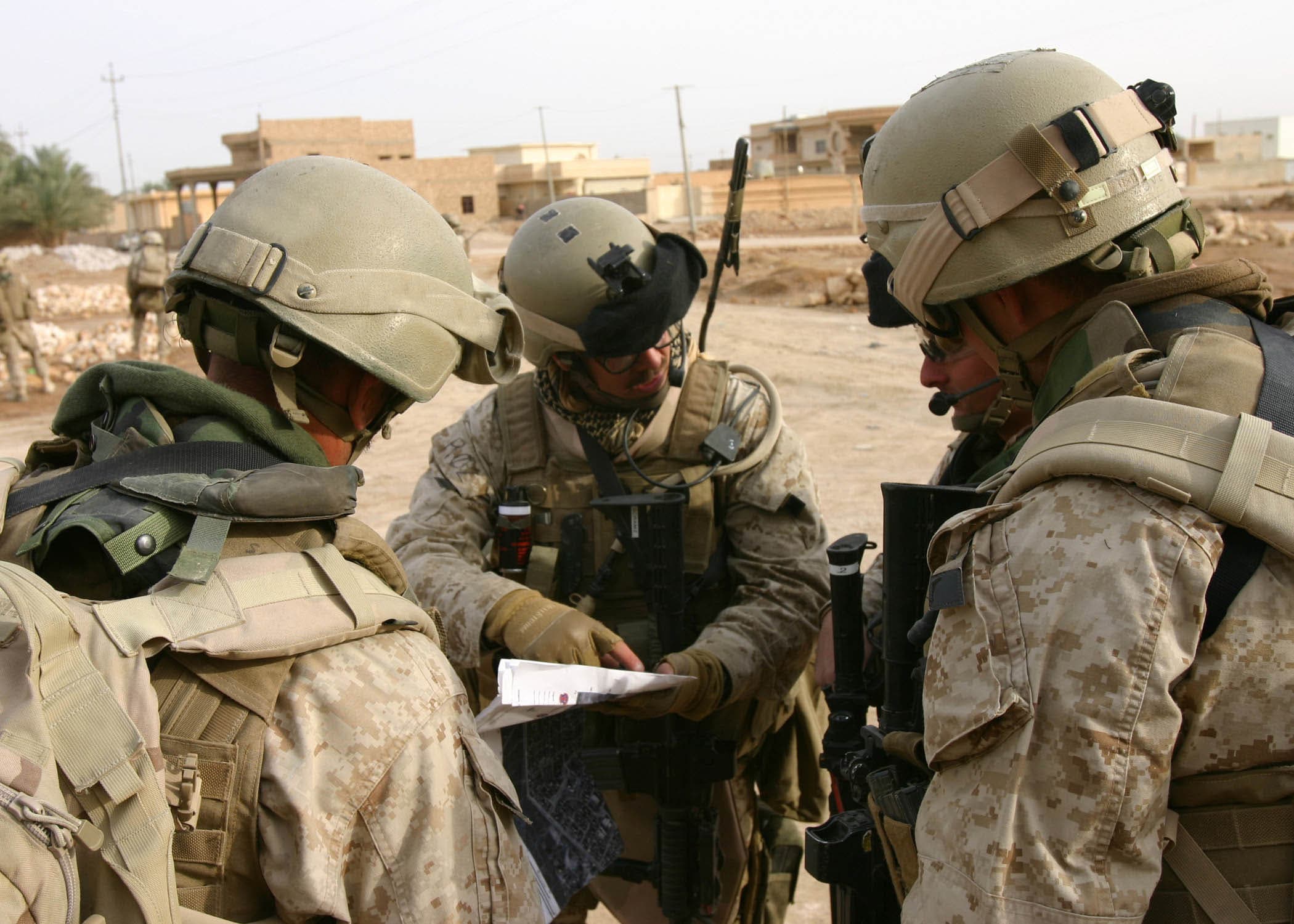
The principles that transformed survival on the battlefield have migrated into civilian emergency care, and for good reason. The emphasis on rapid hemorrhage control, on tourniquets applied early and correctly, and on wound packing and pressure has saved lives in settings far removed from combat. Programs designed for non tactical environments take these proven concepts and teach them to people who will never wear a uniform but may one day stand between someone and a preventable death. The point is not to make security officers into medics. It is to give them the few high impact skills that close the most lethal gaps.
The Core Skills Are Learnable Fast
Bleeding control is not an advanced medical specialty. The essential interventions, applying direct pressure, packing a wound, and correctly placing a tourniquet, can be taught in a short course and retained with periodic refreshers. The barrier is not difficulty. It is that organizations simply have not prioritized it. A team that adds this capability gains an enormous return on a modest investment of time.
Cardiac Arrest and the AED
Hemorrhage is not the only time sensitive emergency. Sudden cardiac arrest survival drops sharply with every passing minute, and the combination of immediate cardiopulmonary resuscitation and an automated external defibrillator dramatically improves the odds. CPR and AED skills, covering adults, children, and infants, belong in the same conversation as bleeding control. An AED on site, with people trained and willing to use it, turns a likely death into a survivable event.
Make It a Standard, Not an Option
The strongest position an organization can take is to require that any security operation field at least one person with current bleeding control and CPR and AED certification before the operation runs. Treating life saving capability as mandatory rather than optional changes the culture. It signals that protecting people means being ready for the worst medical moment, not just the worst security moment, and it ensures that the capability is present when it is needed rather than missing when it counts.
The fence and the camera protect against the threat. The trained hands protect against the outcome. A complete security plan accounts for both.
Building the Capability Into a Security Program
Buying kits is the easy part and the part most organizations stop at. The capability only exists when the equipment, the training, and the post orders line up:
- Place kits where the risk is rather than where the office is, which usually means lobbies, parking structures, loading areas, and event floors, not a supply closet on the third floor.
- Pair every automated external defibrillator with a bleeding control kit, so that responders find one cabinet rather than hunting for two.
- Standardize kit contents across every site, so that an officer who transfers is not learning new equipment during an emergency.
- Assign a named monthly inspection with a written log covering seals, expiry dates, and replacement of anything opened.
- Train every officer rather than designating a few, because the person nearest the injury is the one who matters and shift rotation makes designation meaningless.
- Require hands on application under instruction. Video training produces confidence without competence, and a tourniquet applied loosely is a tourniquet that did not work.
- Refresh at a fixed interval rather than when someone remembers, and record it the same way firearms qualification is recorded.
- Write the medical response into post orders, including who calls emergency services, what is said, who meets the ambulance, and who controls the scene.
- Run the scenario during drills alongside the fire and lockdown exercises, including the awkward part where two casualties compete for one responder.
- Document every use, restock immediately, and review the response in the same way a use of force would be reviewed.
Common Questions
Are security officers permitted to apply a tourniquet?
That depends on state law, the scope of the officer's training, and the client contract, so the answer belongs in written policy reviewed by counsel rather than decided on scene. Many programs do authorize it on the basis of documented, hands on training, and most states have some form of protection for good faith emergency aid, but the specifics vary enough that assumption is not a defense.
Where should kits actually be placed?
Where people are, and where help takes longest to arrive. Mapping placement against the realistic response time from the street to the location is more useful than distributing kits evenly across a floor plan.
How long does the core training take?
The foundational skills are taught in a few hours. That is the argument for training everyone rather than a select group, since the cost per officer is low and the skill perishes slowly compared with the consequence of not having it.
Do the kits expire?
Components do, and sterile packaging degrades once seals are broken or the kit has been rattling around a vehicle for two summers. An uninspected kit should be treated as an unknown rather than as an asset.
More from EPS: Use of Force: The Legal Architecture Behind Every Decision.
Related reading: Workplace Violence Prevention Is a Program, Not a Poster and Walking the Perimeter: A Practical Approach to Physical Security Assessment.
Reference Material: Monitor The Situation; the Stop the Bleed program developed under the American College of Surgeons; the tactical emergency casualty care guidelines for civilian high threat response; the American Heart Association standards for CPR and AED use across adult, child, and infant populations; and the American Red Cross emergency care resources.
Somebody’s gotta do it. Might as well be us.
Mahalos.
About the Author
Kawika Rogers is Managing Partner at Eight Point Solutions LLC, a veteran-led defense consulting and training firm based in Maryland. He served as an Infantry Team Leader in the United States Marine Corps, then directed the Field Training Officer program and served as an Armorer for Triple Canopy at Camp Arifjan and Camp Buehring in support of Operation Inherent Resolve. He has also served in an advisory and operational capacity in Eastern Europe. Rogers holds over 15 instructor certifications in firearms, defensive tactics, and emergency medicine, and studied International Relations and Global Security at American Military University.
Eight Point Solutions LLC 7404 Executive Place, 5th Floor, Suite L-17, Lanham, MD 20706 // rogers@eightpointsolutions.com // eightpointsolutions.com SDVOSB // eightpointsolutions.app // eightpointsolutions-tech.com // SAM UEI: EY34ARER2TD9